
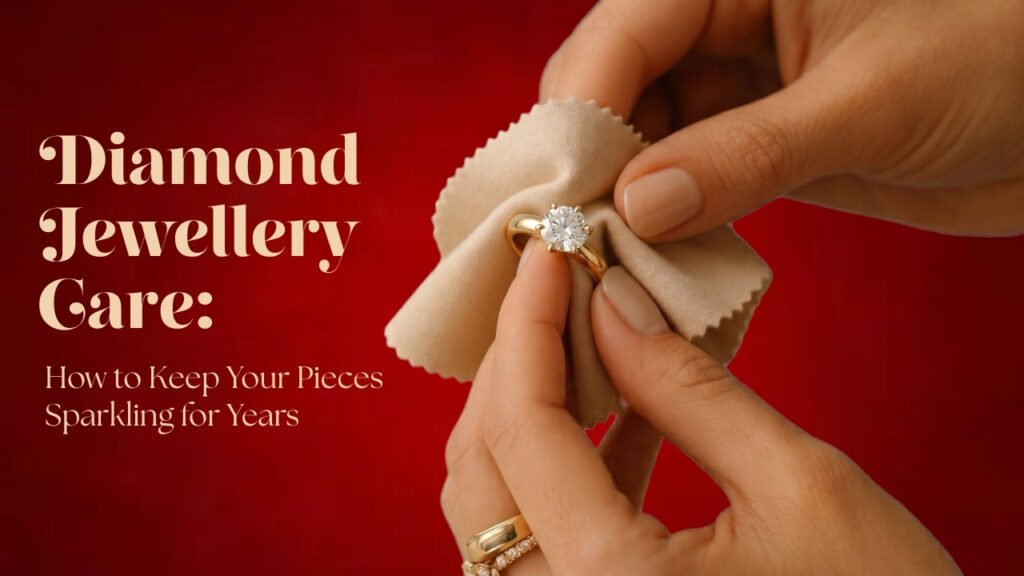
Diamonds are famously durable — they’re the hardest natural material on earth — but that doesn’t mean your diamond jewellery is maintenance-free. Everyday oils, lotions, and even soap residue build up on the surface over time, dulling the sparkle you paid for. The good news is that keeping diamond jewellery looking its best doesn’t require anything expensive or complicated. Here’s what actually works.
Why Diamonds Lose Their Sparkle (It’s Not the Diamond’s Fault)
A diamond’s brilliance comes from how light enters the stone and bounces back out through precisely cut facets. When a thin film of oil, lotion, or everyday grime coats the surface, it interferes with how light passes through, making even a high-quality diamond look flat and lifeless. This is purely a surface issue, not damage to the stone itself, which is why regular cleaning restores the sparkle almost instantly.
Safe At-Home Cleaning Method
The simplest and safest way to clean diamond jewellery at home uses ingredients you almost certainly already have. Mix a few drops of mild dish soap into a bowl of warm (not hot) water, and let the piece soak for about twenty to thirty minutes to loosen built-up residue. Use a soft-bristled brush — a clean, soft toothbrush works well — to gently clean around the setting and underneath the stone, where oils and dust tend to collect most. Rinse thoroughly under running water, making sure the drain is closed or covered, and pat dry with a soft, lint-free cloth before letting it air dry completely.
Avoid using paper towels or tissues to dry, since they can leave tiny scratches on softer metal settings like gold, and skip anything abrasive on the stone itself.
What to Avoid
A few common habits can do more harm than good. Ultrasonic cleaners, while effective for solid diamond pieces, can loosen fragile or older settings and are risky for jewellery with other gemstones that are softer or more brittle than diamond. Household chemical cleaners, including anything with ammonia or bleach, can damage certain metal finishes and should never be used directly on jewellery. And everyday activities like swimming in chlorinated pools, applying perfume or hairspray, and using hand sanitiser while wearing rings can all leave residue or, over time, affect the metal’s finish — it’s best to remove jewellery before these activities rather than clean it after.
Storage Habits That Actually Protect Your Jewellery
How you store diamond jewellery between wears matters almost as much as how you clean it. Store pieces separately from each other, ideally in individual soft pouches or a lined jewellery box with dividers, since diamonds are hard enough to scratch other jewellery, including other diamonds, if they’re tossed together loosely. Keep pieces away from direct sunlight and extreme humidity, both of which can affect certain metal finishes over time. And if you’re not wearing a piece for an extended period, a simple check every few months — even just a quick clean and a visual inspection — helps catch any loose settings early before they become a bigger problem.
When to See a Professional
Home cleaning handles day-to-day maintenance, but some things need professional attention. If a stone feels loose or you notice movement when you gently touch it, that’s a sign the setting needs attention before the stone works its way further loose or falls out entirely. Visible scratches on the metal band, especially on softer 18K or 22K gold settings, can often be professionally polished out. And a general professional cleaning and inspection once a year — even for pieces that look fine — catches early wear on prongs and clasps that isn’t always visible to the naked eye.
Everyday Habits That Extend the Life of Your Jewellery
Beyond cleaning and storage, a few simple daily habits make a real difference over years of wear. Put jewellery on last when getting ready, after applying perfume, lotion, and hairspray, so it doesn’t come into direct contact with those products. Take rings off before activities that involve hand contact with hard surfaces — gardening, gym workouts, or heavy cleaning — since impacts are a common cause of loosened settings. And get into the habit of a quick visual check every few weeks, just glancing at prongs and clasps, so any early signs of wear get caught while they’re still a simple fix.
Caring for Diamonds Alongside Other Gemstones
If your jewellery combines diamonds with softer gemstones — pearls, emeralds, or coloured stones are common in fusion designs — the cleaning approach needs to account for the softer stone rather than just the diamond. Emeralds, in particular, are more brittle than diamonds and can be damaged by the same soaking method that’s perfectly safe for a solid diamond piece. When in doubt about a mixed-stone piece, a quick wipe with a soft, slightly damp cloth is a safer default than a full soak, or bring it in for a professional clean where the setting and stone type can be properly assessed.
Traveling With Diamond Jewellery
If you’re traveling with diamond pieces, a few precautions go a long way. Carry jewellery in your hand luggage rather than checked baggage, both for security and to avoid temperature and pressure changes that checked cargo holds can experience. Pack pieces in a hard, compartmentalised case rather than loose in a pouch, since movement during transit is a common cause of scratches even between different pieces of your own jewellery. And if you’re heading somewhere with very different humidity or temperature than home, give pieces a quick wipe-down after the trip, since environmental changes can sometimes leave residue you might not immediately notice.
Is Jewellery Insurance Worth Considering?
For higher-value diamond pieces, it’s worth at least considering insurance, particularly if the piece isn’t one you can easily replace sentimentally. Most jewellery insurance requires a formal valuation certificate, which most reputable jewellers, including our showrooms, can provide at the time of purchase or on request afterward. This is separate from the manufacturer’s warranty or repair service some jewellers offer, which typically covers craftsmanship issues rather than loss or theft.
Understanding the Four Cs and Why They Affect Care, Too
Most buyers know the Four Cs — cut, clarity, colour, and carat — as a way to evaluate a diamond’s quality and price, but they’re also worth understanding from a care perspective. A diamond’s cut affects how many facets and edges are present to trap dust and oil, meaning more elaborately cut stones may need slightly more frequent cleaning to maintain their sparkle compared to simpler cuts. Clarity, meanwhile, has no bearing on cleaning needs, but it’s worth knowing that any internal characteristics visible under magnification are permanent and unrelated to surface grime — so if a diamond looks slightly hazy, it’s almost always a cleaning issue rather than a change in the stone itself.
Frequently Asked Questions
How often should I clean my diamond jewellery at home?
Every two to four weeks for pieces worn regularly is a good baseline, though a quick rinse after any activity involving lotion or oils helps maintain shine between full cleanings.
Is it safe to wear diamond rings in the shower?
It’s generally better to remove them, since soap and shampoo residue can build up in settings and dull the sparkle over time, even though the diamond itself won’t be damaged.
Can I use toothpaste to clean diamond jewellery?
It’s not recommended — toothpaste can be mildly abrasive and may scratch softer metal settings, even though it won’t harm the diamond itself.
How do I know if a stone setting needs professional repair?
If you can feel any movement when gently pressing on the stone, or notice a prong looks bent or worn thin, it’s time for a professional check rather than continued wear.
Can I clean diamond jewellery that also has pearls or coloured stones?
Be more cautious — softer stones like pearls and emeralds can be damaged by soaking or brushing methods that are safe for diamonds alone. A gentle wipe or professional cleaning is safer for mixed-stone pieces.
Building a Simple At-Home Care Routine
The easiest way to stay consistent is to build diamond care into an existing habit rather than treating it as a separate chore. Many of our customers find it easiest to do a quick clean once a month — for instance, on the first weekend of the month — and pair it with a thirty-second visual check of prongs and clasps. This kind of small, regular routine catches issues far earlier than an occasional deep clean once a year, and takes only a few minutes each time.
Final Thought
A little regular care goes a long way toward keeping diamond jewellery looking as good as the day you bought it. If it’s been a while since your pieces had a professional look-over, our team at the Beleghata and Baguiati showrooms offers cleaning and setting checks — it’s a quick way to catch small issues before they become bigger ones.