
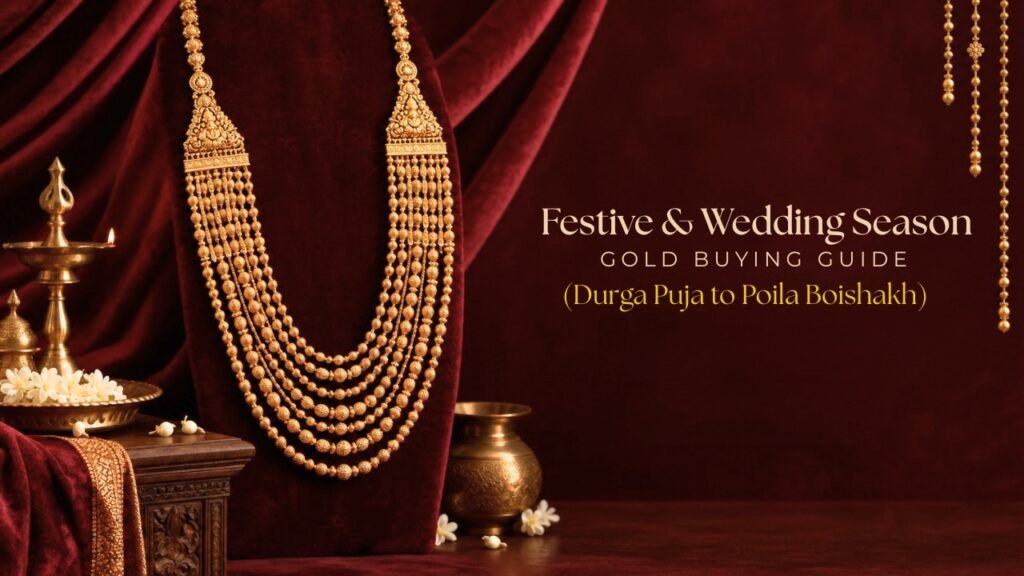
In Bengal, gold buying isn’t spread evenly across the year — it follows a calendar of festivals and occasions, each with its own traditions around what to buy and why. Whether you’re planning ahead for Durga Puja or trying to time a wedding purchase, here’s a season-by-season guide to make sense of it all.
Durga Puja: The Season That Sets the Tone
Durga Puja is arguably the biggest jewellery-buying occasion of the Bengali calendar. It’s tradition for families to buy at least one new piece of jewellery during the Puja season, often gifted to daughters, daughters-in-law, or worn as part of new outfits for pandal-hopping across the five main days.
Popular choices during Puja tend to lean toward versatile, wearable pieces rather than heavy bridal sets — think delicate gold chains, small stud earrings, and lightweight bangles that pair well with both traditional sarees and more contemporary festive outfits. Since Puja falls during peak buying season, it’s worth starting your shopping at least two to three weeks ahead of Mahalaya, both to avoid the last-minute rush and to have more room to negotiate on making charges before demand peaks.
Kali Puja and Bhai Phota: Smaller Occasions, Meaningful Gifts
Following closely after Durga Puja, Kali Puja and Bhai Phota bring their own smaller but meaningful gifting traditions. Bhai Phota, in particular, often involves sisters gifting or receiving small gold tokens — a ring, a pendant, or a small coin — as part of the ritual blessing exchanged between siblings. These purchases tend to be modest in size but high in sentimental value, making simple, well-crafted pieces a better fit than elaborate designs.
Wedding Season: October Through February
Bengal’s wedding season overlaps significantly with the festive calendar, typically running from October through February, with auspicious dates clustering around this window. This is when bridal jewellery buying peaks — complete sets including necklaces, earrings, bangles, mangalsutras, and the traditional shakha-pola all see their highest demand of the year.
Because demand is at its peak, this is also when showrooms are busiest and making charges are least flexible. If your wedding date allows any flexibility, shopping for bridal jewellery a few months ahead of the actual wedding season rush — ideally by August or early September — gives you better selection and more room for customisation without the time pressure of last-minute buying.
Poila Boishakh: New Year, New Beginnings
Poila Boishakh, the Bengali New Year in mid-April, carries its own tradition of buying gold as a symbol of prosperity for the year ahead — closely mirroring the sentiment behind Akshaya Tritiya, observed more widely across India around the same time. Many Bengali families treat this as an auspicious day specifically for gold coin or small jewellery purchases, seen as an investment in good fortune rather than a piece meant for a specific event.
Since this occasion is about symbolism as much as style, simple gold coins, small pendants, or thin bangles are common choices, prioritising purity and auspicious timing over elaborate design.
Saraswati Puja: A Quieter Buying Moment
Saraswati Puja, typically falling in late January or early February, is a smaller but still notable occasion, especially for families with young students. It’s common for gold pens, small pendants, or tokens symbolising knowledge and learning to be gifted around this time — a niche but consistent tradition worth knowing if you’re shopping for a student in the family.
Planning Your Purchases Around the Calendar
If you’re trying to plan gold purchases strategically across the year rather than reactively, a useful approach is to separate your buying into two categories: symbolic, smaller purchases tied to specific festivals (Bhai Phota, Poila Boishakh, Saraswati Puja), and larger investment or bridal purchases tied to weddings, which benefit from being planned well ahead of peak season rather than during it.
It’s also worth remembering that making charges — not the underlying gold rate — are what fluctuate most with seasonal demand. Buying slightly outside of peak festive windows, when showrooms have more flexibility, can mean meaningfully better value on the labour and craftsmanship portion of your bill, even if the gold rate itself is largely the same.
Budgeting Across a Busy Festive Calendar
With so many occasions clustered across a few months, it’s easy for festive gold spending to add up faster than planned. A practical approach many families use is setting a rough annual festive jewellery budget at the start of the year, then allocating smaller portions to each occasion rather than deciding spontaneously each time. Smaller symbolic purchases — coins, thin bands, small pendants — for Bhai Phota, Saraswati Puja, and Poila Boishakh can be planned as modest, recurring line items, while the larger wedding season budget is planned separately and well ahead of time.
Gifting Etiquette Around Festive Gold
Gold gifting in Bengali households often follows unwritten but well-understood etiquette. Gifts to daughters and daughters-in-law during Puja are typically seen as a gesture of blessing and inclusion within the family, while Bhai Phota gifts between siblings are more personal and symbolic than about size or value. If you’re new to these traditions — for instance, marrying into a Bengali family — it’s completely reasonable to ask family members or even your jeweller about what’s typically appropriate for a given occasion rather than guessing.
Planning Ahead for Multiple Occasions in One Family
For larger families with several members needing gifts across the same festive season — say, multiple daughters-in-law during Puja, or several nieces and nephews for Bhai Phota — it’s often more cost-effective to plan these purchases together rather than one at a time. Buying multiple similar smaller pieces together sometimes opens room for better making-charge negotiation than several separate small transactions spread across weeks, simply because the showroom is fulfilling a larger single order.
Beyond Bengali Festivals: A Multicultural City’s Calendar
Kolkata’s jewellery buying calendar isn’t limited to Bengali Hindu festivals alone — the city’s multicultural character means Christmas, New Year, and various community-specific celebrations throughout the year also see their own gifting patterns, often centred around smaller, versatile pieces rather than elaborate traditional sets. If you’re shopping for a mixed-tradition family or a multicultural circle of friends, versatile, minimal-design pieces tend to work well across occasions without being tied too specifically to one tradition’s symbolism, making them a safer gifting choice when you’re unsure of specific customs.
Choosing Designs That Suit the Occasion
Not every festive occasion calls for the same style of jewellery. Puja and everyday festive wear generally suit lighter, more versatile pieces that can be reworn across multiple events during the season, while wedding-specific purchases justify investing in heavier, more elaborate designs meant to be the centrepiece of a single major occasion. Symbolic purchases tied to Poila Boishakh or Bhai Phota, on the other hand, are less about design and more about the ritual of buying itself, so simplicity is often preferred over elaborate craftsmanship for these smaller, sentiment-driven purchases.
Frequently Asked Questions
Is it necessary to buy gold specifically during Durga Puja?
It’s a strong cultural tradition rather than a strict requirement — many families do buy at least a small piece during Puja, but it’s ultimately a personal choice tied to sentiment rather than obligation.
When should I start shopping for wedding jewellery?
Ideally a few months before the wedding season rush begins, around August or early September, to get better selection and more room for customisation.
What’s typically gifted during Bhai Phota?
Small, sentimental pieces like a thin ring, pendant, or gold coin are most common, prioritising meaning over size or elaborate design.
Is Poila Boishakh a good day to buy gold as an investment?
Many families consider it an auspicious day for gold purchases, similar in spirit to Akshaya Tritiya, making it a popular time for coin or small jewellery buying specifically for its symbolic value.
Is it cheaper to buy gold jewellery outside the festive season?
The underlying gold rate stays largely the same, but making charges tend to be more flexible outside peak festive and wedding demand, which can mean better overall value on the labour portion of your bill.
A Season-by-Season Snapshot
To bring it all together: Durga Puja calls for versatile, wearable pieces bought a few weeks ahead of the rush; Kali Puja and Bhai Phota favour small, sentimental gifts; wedding season (October–February) demands the earliest planning of all, ideally starting months in advance; Saraswati Puja brings smaller, symbolic tokens tied to learning; and Poila Boishakh in April rounds out the year with gold coins and small pieces bought purely for auspicious value. Keeping this rhythm in mind makes it far easier to plan thoughtfully across the year instead of buying reactively each time an occasion arrives.
Final Thought
Bengal’s festive calendar offers a natural rhythm for planning your jewellery purchases throughout the year, whether you’re buying for sentiment, tradition, or investment. Our Beleghata and Baguiati showrooms stock collections tailored to each of these occasions, and our team can help you plan purchases ahead of peak season for the best combination of selection and value.